The clearest signs your podcast has outgrown your home setup are setup taking longer than recording, an audio quality ceiling you cannot fix, guests or video your space cannot carry, and editing hours climbing every week. Some of these you can fix at home. Others are real ceilings that only a studio removes.
This guide runs through all eight and, for each, tells you honestly whether it is worth fixing where you are or a sign to move.
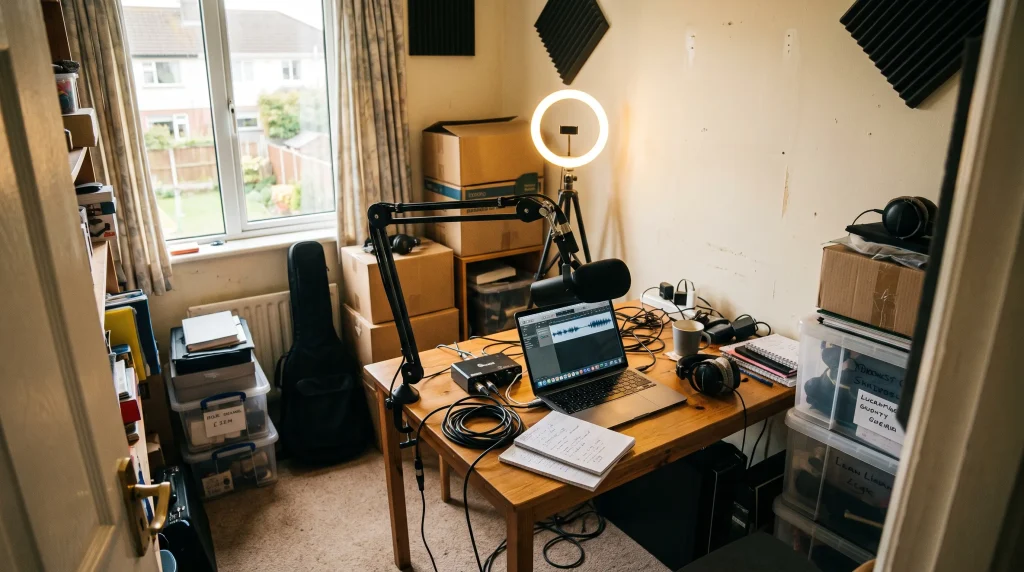
Some Signs You Can Fix at Home, Some You Cannot
Not every problem with a home setup means you need a studio. Echo and background noise are often cheap to fix where you are. Space, guests, video and consistency are much harder to solve in a domestic room.
As you read, sort each sign into one of those two buckets. That is what decides whether you spend on your room or move out of it.
Sign 1: Setup and Teardown Takes Longer Than Recording
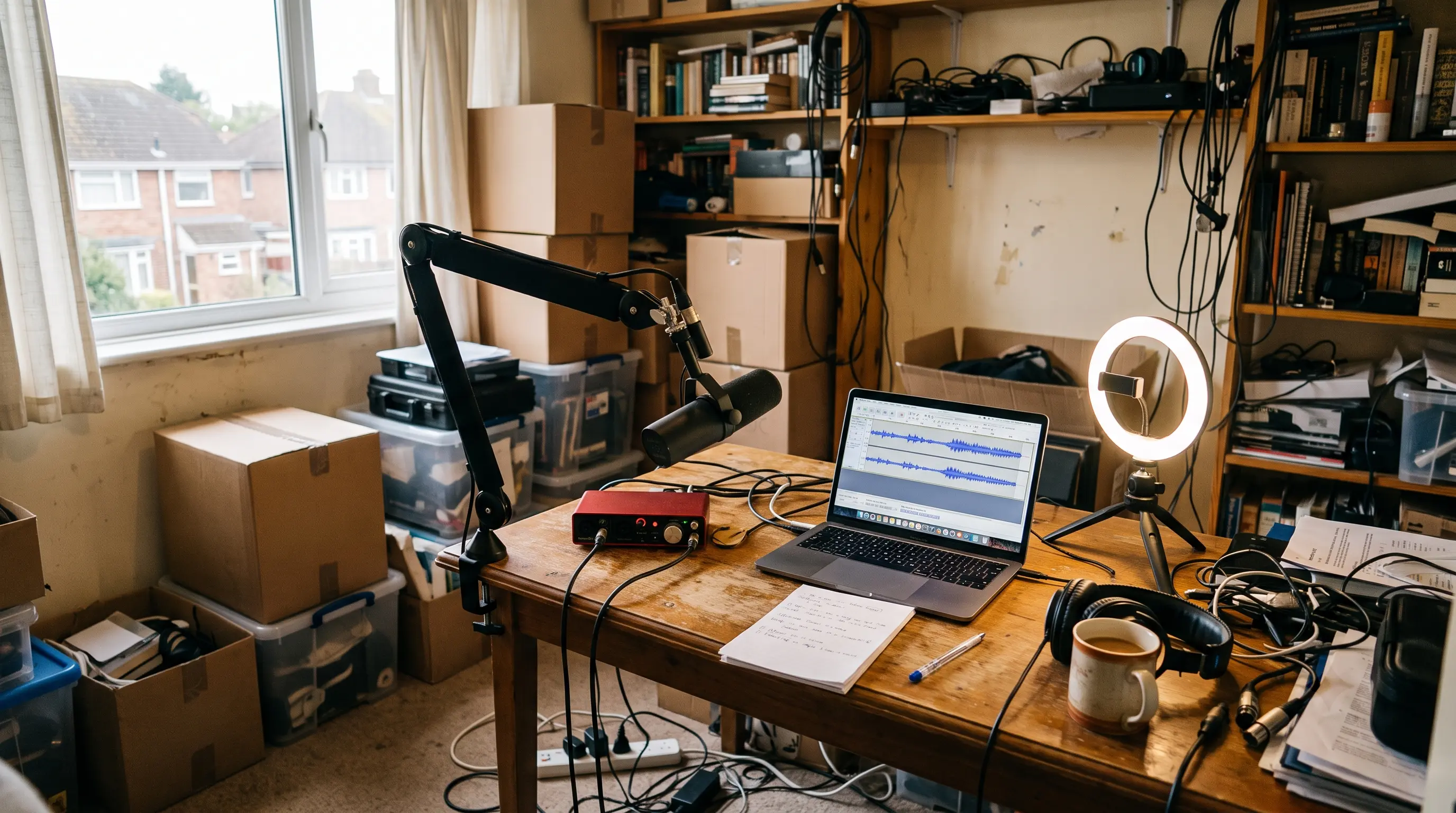
If you spend more time assembling and packing away your gear than actually recording, your home setup has become the bottleneck. Every episode carries a fixed tax of setup, levels and teardown, and that time does not shrink as your show grows.
This is a real ceiling. A room you can leave set up, or a studio where the setup is already done for you, is the only thing that removes it.
Sign 2: Your Audio Still Sounds Roomy Whatever You Try
If your recordings still sound echoey after you have moved the mic, added soft furnishings and lowered your levels, you may be hitting the limit of an untreated room. Room reflections get baked into the file, and no edit fully removes them.
Some of this is fixable at home. Before you decide the room is the problem, work through the common recording mistakes that cause most echo, since treatment often solves it cheaply.
If you have done all that and it still rings, the room itself is the ceiling.
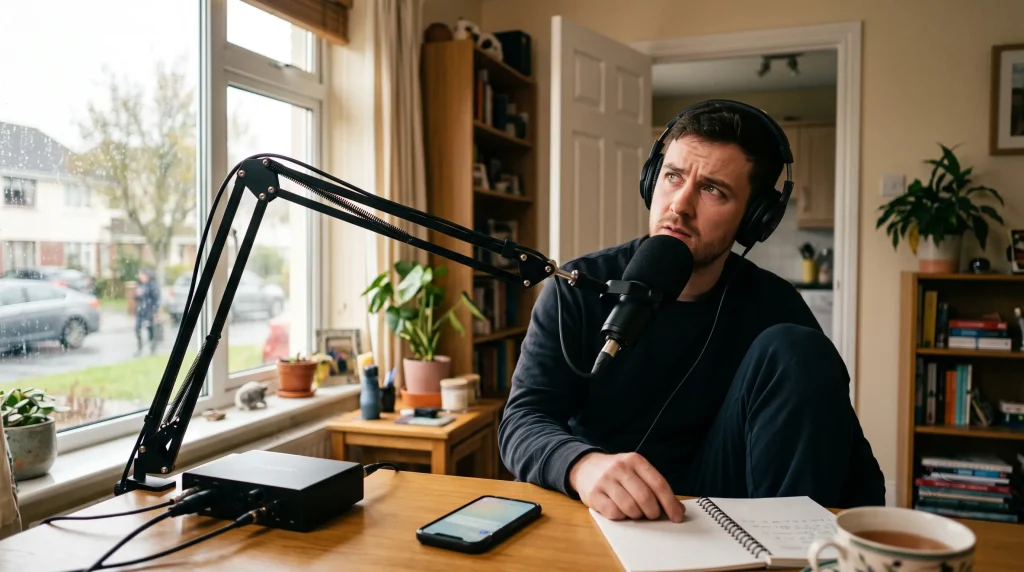
Sign 3: Guests Hesitate or the Room Undersells the Show
If guests seem uneasy recording in your spare room, or a serious guest would look out of place there, your space is limiting who you can book. Guests perform better somewhere that signals the conversation matters, and a domestic room quietly caps the calibre of guest who will say yes.
This is a real ceiling. No amount of gear changes how a spare room reads to a guest.
Sign 4: You Want Video and the Space Cannot Carry It
If you want to publish video and your room cannot handle the lighting, framing and camera angles, you have outgrown an audio-first setup. Video exposes everything audio forgives: the background, shifting light, a single flat camera angle.
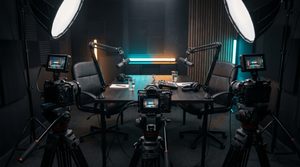
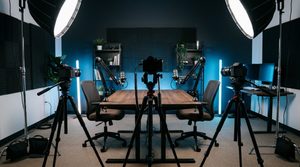
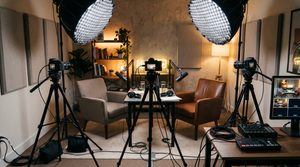
A multi-camera session solves this in one sitting. A multicam podcast session at SG Studios includes a producer on site and up to four people at no extra charge, from €250 per hour + VAT, so panels and interviews are covered without hiring a crew.
Muhammad, who recorded with us, put it simply: “Every room has its own character. The whole place is well thought out and looks fantastic on camera.”
Sign 5: Episodes Sound Different Week to Week
If episode ten sounds noticeably different from episode two, your setup is not repeatable enough. Inconsistent sound and framing make a show feel amateur even when each episode is fine on its own, and they slow editing down because every episode needs different treatment.
This is a real ceiling once you are publishing regularly. A fixed room with the same setup every time is what makes episode forty match episode one.
Sign 6: Household Noise Keeps Forcing Retakes
If traffic, housemates, deliveries or a boiler keep ruining takes, your recording environment is costing you real time. Every interruption is a retake, and recording around the household pushes you into odd hours.
Some of this is manageable at home with scheduling and a proper noise sweep before you record. But if you cannot get a reliable quiet window, that is a ceiling a sound-managed room removes.
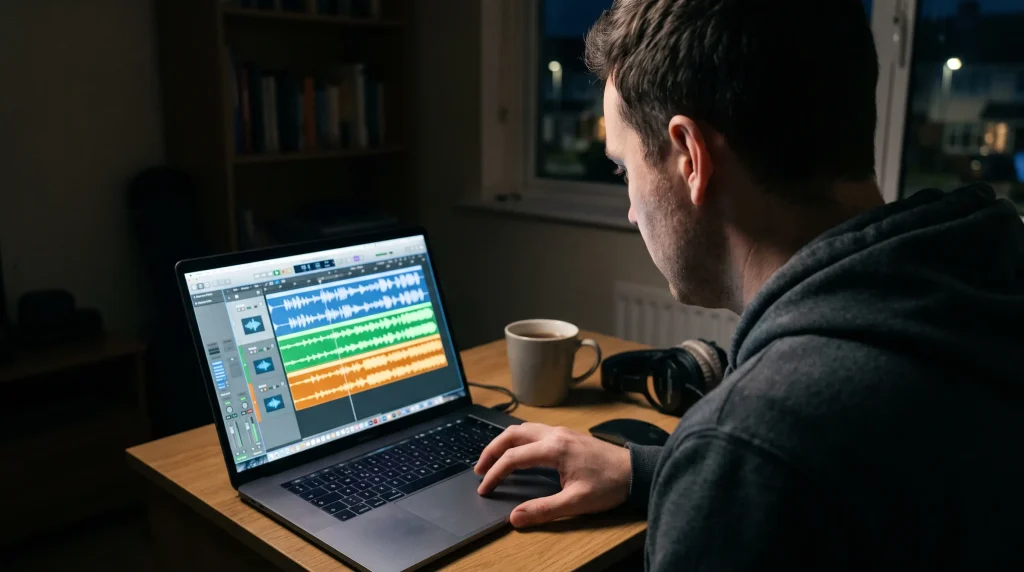
Sign 7: Editing Time Is Ballooning to Rescue the Audio
If most of your editing time goes on rescuing the audio rather than shaping the episode, your recording quality is the real problem. Cleaning noise, evening out levels and patching retakes can take several times the episode length, and that time is the hidden cost of a home setup.
Cleaner source audio cuts that work sharply. If you would rather hand editing off entirely, podcast editing at SG Studios starts at €75 + VAT and is delivered within 7 business days.
Sign 8: Your Lost Hours Now Cost More Than a Session
If you add up the hours you lose to setup, retakes and rescue-editing, and they outweigh the cost of simply booking a session, the maths has flipped. A home setup looks free because you do not invoice yourself for your own time.
Once a show is on a regular schedule, those hours become the most expensive part of it. When a booked session costs less than the working time a home recording eats, staying at home is the pricier option.
What to Do if This Sounds Like Your Show
If several of these signs are true, the next step is to work out whether a studio actually fits your format and budget, rather than rushing into a booking. We laid that decision out in detail in home setup versus a professional studio, weighed by format, cadence and cost.
If only the fixable signs apply, sort the room first and stay where you are. If the real ceilings apply, a studio is the upgrade.