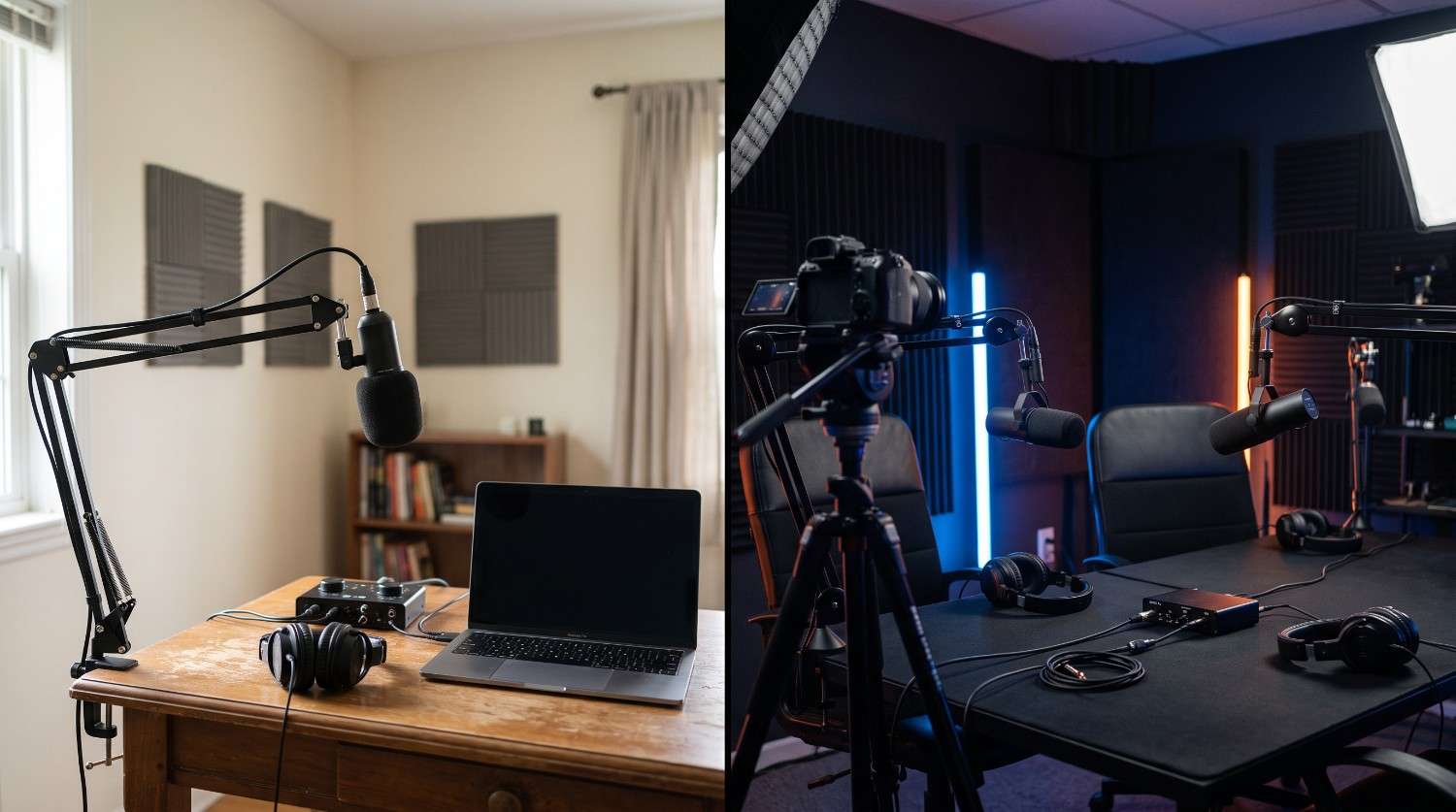
Choosing between a home podcast setup vs professional podcast studios comes down to how often you publish, whether you are filming as well as recording, and how much of your own time you are willing to spend on production.
Most people compare microphones and cameras, when the real difference sits in the room itself, the setup time before each episode, and the hours of cleanup afterwards. Gear is the cheap part. Consistency is the expensive part.
This guide breaks the decision down by format, cadence and the point at which a home setup stops paying for itself.
Home Setup or Studio, Which Fits Your Podcast?
Record at home if you publish audio-only, host solo or with one regular co-host, and can dedicate a small acoustically treated room to it. Book a studio if you are producing video, bringing in external guests, running panels, or publishing on a fixed weekly schedule where setup time and reshoots start eating into real working hours.
That is the short version. The longer answer depends on three variables that most comparison articles skip.
- Format. Audio forgives a lot. Video exposes lighting, framing and background instantly.
- Guests. A guest sitting in your box room behaves differently to a guest in a purpose-built set.
- Cadence. One episode a month is a hobby workflow. One a week is an operation.
Work out which of those three you are dealing with before you price anything, because they decide the answer far more than your microphone does.
What Changes in a Professional Studio
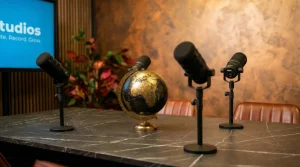
A studio removes the variables you cannot control at home. Rooms are acoustically treated so reverberation is dealt with structurally rather than in post. In studios, lighting is fixed and repeatable, cameras are pre-framed, and microphone levels are checked before you sit down. You arrive, record, and leave with the files.
The practical gains show up in a few places.
- Consistency across episodes. Same room, same lighting, same framing, so episode 40 matches episode one.
- Guest experience. People perform better in a space that signals the conversation is worth taking seriously.
- Multi-camera coverage. Wide, close and reaction angles give an editor something to cut with.
- Clean source audio. Less noise reduction in post means voices keep their body and presence.
- Repeatable output. Standardised sessions make editing faster and cheaper, whether you do it or hand it off.
If you want to see how a room feels before committing to anything, most facilities including ours run a free studio tour in Dublin so you can test the acoustics and set options yourself.
Home Setup vs Podcast Studio: Detailed Comparison
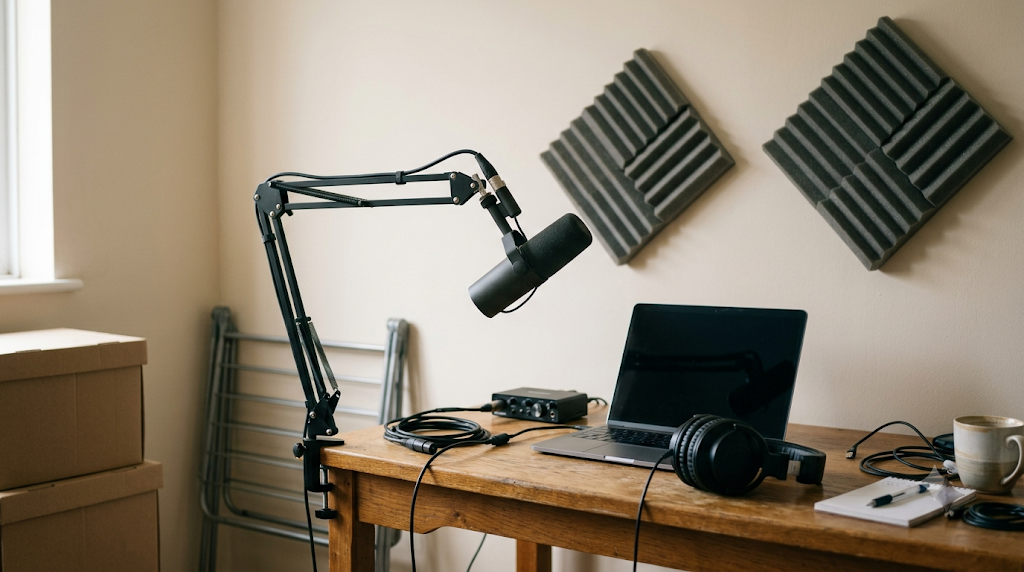
The table below maps the practical differences rather than the gear lists. Read it against your own format and publishing schedule.
| Factor | Home podcast setup | Professional studio |
| Upfront cost | Higher, paid once as equipment | None, paid per session |
| Ongoing cost | Low, mostly your time | Per booking, scales with volume |
| Audio quality ceiling | Limited by room acoustics | Set by acoustic treatment and mic placement |
| Video readiness | Needs lighting, background and space | Pre-lit and pre-framed |
| Setup time per episode | 30 minutes or more each way | None for the client |
| Guest suitability | Fine for regulars, awkward for executives | Designed for external guests |
| Multi-camera capability | Difficult in small rooms | Standard |
| Schedule flexibility | Total | Limited to booked slots |
| Best suited to | Solo and remote audio shows | Video podcasts, interviews, panels |
Neither column is the winner. The right answer is whichever one you can sustain at your publishing frequency without dreading it.
Conclusion
Record one episode in a pre-configured room and compare it against your own. This is how you can choose between the home podcast setup vs professional studio.
Move to a studio when your format outgrows your room. If you publish solo or remote audio, hit your schedule and already sound clean, stay where you are.
Want to try a professional podcast studio in Dublin first? Contact SG Studios, tell your requirements and we will recommend the room and session length worth booking.