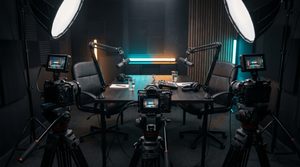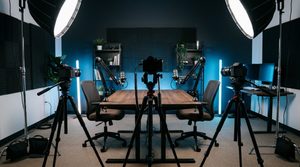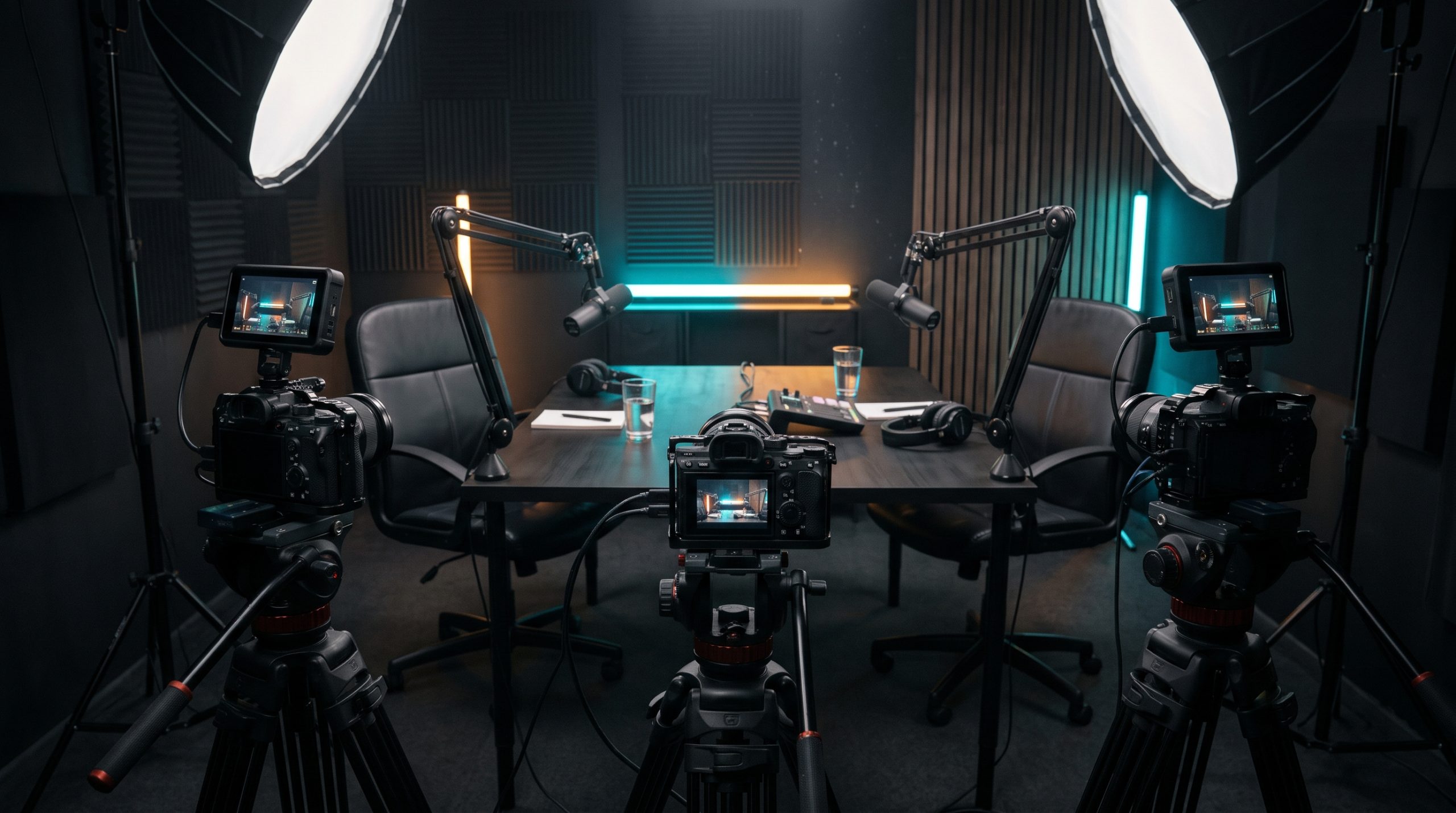
For most creators filming fewer than two or three sessions a month, studio hire costs less than buying camera gear. A basic solo kit costs about €3,500 before lenses, sound treatment or a spare room, and that money covers roughly 14 to 35 studio hours, depending on the hourly rate.
That changes once you’re filming every week in the same spot. At that volume, owned gear starts paying for itself, as long as you already have a quiet room and the time to set up before every shoot.
This guide prices camera gear vs studio hire in euro, works out the break-even point in studio hours, and lists the costs that never appear on a camera receipt.
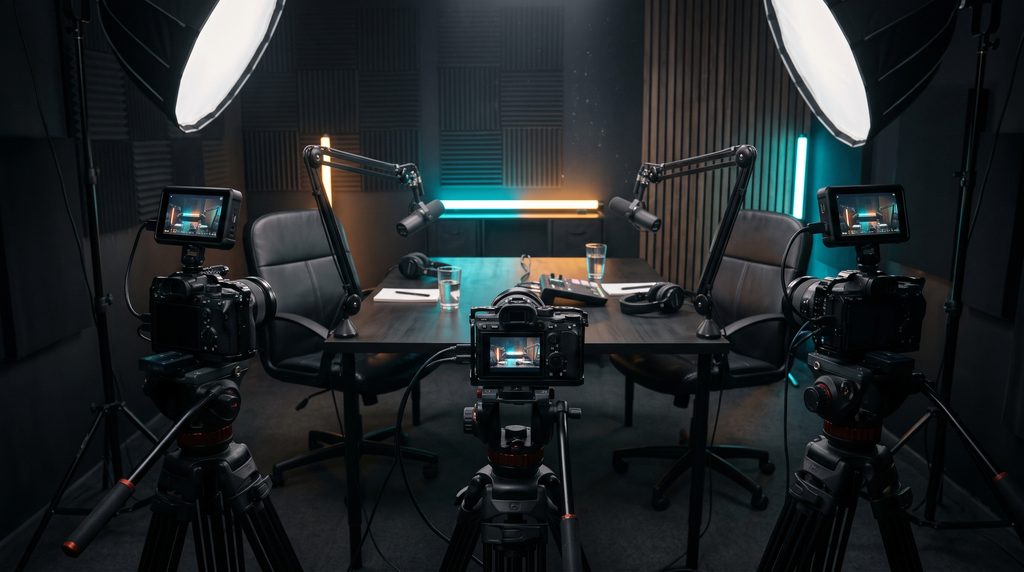
Which Costs Less for Creators, Camera Gear or Studio Hire?
Studio hire is cheaper until you’re recording often enough to use the kit’s full value. A two-person multicam podcast kit costs close to €9,000 in core gear alone. At a typical hourly studio rate, that buys somewhere between 36 and 90 hours of recording, which is a year of weekly one-hour episodes for many shows.
The answer depends on three things:
- How often you record. Weekly or more pushes the maths toward owning.
- How many people are on camera. Every extra angle adds a camera, a light and a mic.
- What space you have. A bare room with hard walls needs treatment before any microphone sounds right.
What a Creator Camera Kit Costs to Buy in Ireland
A credible creator kit costs about €3,529 for a solo setup and €8,948 for a two-person multicam setup, based on current Irish and EU retail prices for one full-frame camera, a broadcast dynamic mic and a full-colour COB light per position.
The figures below use one mid-range model per category so the totals are easy to check.
| Item | Unit price | Solo kit | Multicam kit (2 people) |
|---|---|---|---|
| Sony A7 IV camera body | €2,299 | 1 (€2,299) | 3 (€6,897) |
| Shure SM7B microphone | €412 | 1 (€412) | 2 (€824) |
| Amaran 150c light | €409 | 2 (€818) | 3 (€1,227) |
| Total core kit | €3,529 | €8,948 |
These totals leave out lenses, an audio interface, stands, softboxes, memory cards and cables. A multicam podcast also needs one wide shot and two close-ups running at once, so you can’t share one camera across angles.
How Many Studio Hours Does the Price of a Camera Kit Buy?
The solo kit’s price buys 14 to 35 hours of studio time, and the multicam kit’s price buys 36 to 90 hours, depending on whether a studio charges €100, €150 or €250 an hour. Those three rates are worked examples, so plug in the quote you actually get.
| Studio rate per hour (example) | Hours equal to solo kit (€3,529) | Hours equal to multicam kit (€8,948) |
|---|---|---|
| €100 | 35 hours | 89 hours |
| €150 | 23 hours | 60 hours |
| €250 | 14 hours | 36 hours |
Here’s the quick test. Divide the kit cost by the hourly rate you’re quoted, then compare it with how many hours you’ll really record this year. If your yearly hours sit well under that number, hiring wins.
Rented studio time usually includes the room, lighting and sound treatment too. Owned gear covers none of that. Before comparing quotes, check what’s in the hourly rate on a studio’s frequently asked questions page so you’re comparing like with like.
Hidden Costs of Owning Camera Gear That Never Show on the Receipt
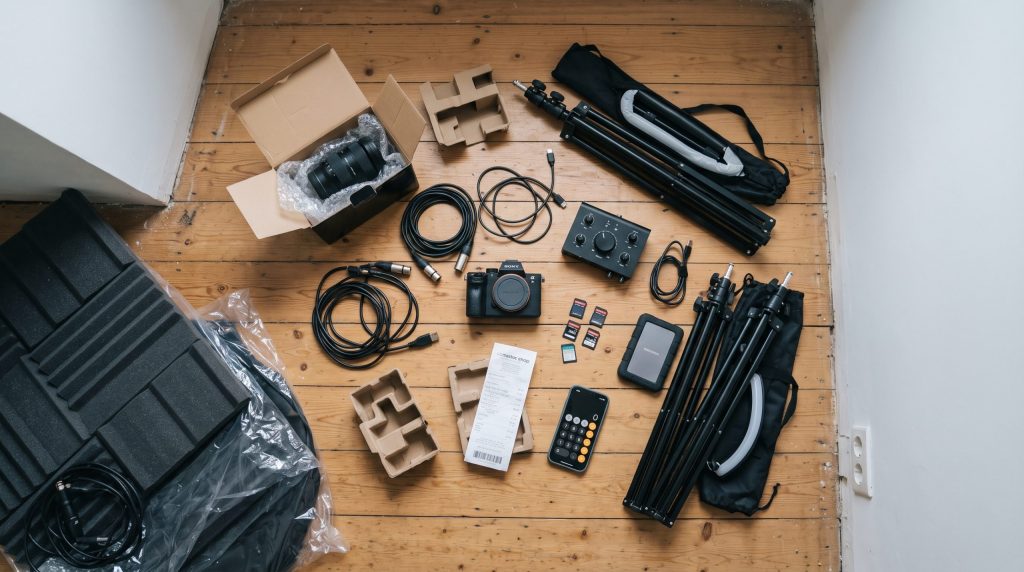
The biggest hidden costs of owning gear are the room, the setup time and the accessories the camera body doesn’t include. None of them appear in the kit totals above, but each one changes whether owning actually saves money.
- Acoustic treatment. Hard walls and floors create echo that no mic fixes. Panels, rugs and a dedicated space cost money and floor area.
- Setup and teardown time. Framing three cameras, balancing lights and checking levels can eat the first half hour of every session. That’s time you aren’t recording.
- Lenses and accessories. Bodies are usually sold without a lens. Stands, softboxes, cards and an audio interface all add up.
- Storage and backup. Multicam 4K footage fills drives quickly, so you’ll need somewhere to keep it.
- Tax treatment. If the gear is a business asset, Revenue’s wear and tear allowance rules spread the relief at 12.5% a year over eight years. Your accountant can confirm how studio hire is treated for your business.
When Buying Camera Gear Beats Studio Hire
Buying wins when you record at least weekly, film alone or with one guest, and already own a quiet room you can leave set up. In that case, the per-session cost drops every month, and the kit typically passes the break-even hours within the first year.
Owning also makes sense if:
- You shoot reactive content that can’t wait for a booking slot.
- Your set needs to stay identical for months, with no reset between shoots.
- You have the skills, or the patience, to light and frame for yourself.
When Studio Hire Beats Buying Camera Gear
Studio hire wins when you record less than weekly, need more than one camera angle, or have no treated room at home. You pay only for the hours you use, and the cameras, lights and mics are set up before you arrive.
Hiring is also the better call for:
- Guest-heavy shows. Guests travel to a proper studio more readily than to a spare bedroom.
- Variety of looks. Different sets give a fresh background without buying new props or paint.
- Testing a format. You can record a handful of pilot episodes before deciding whether the show deserves its own kit.
If those points describe your plan, you can book a recording session and run a real episode at a fixed hourly cost, then compare it with the maths above.
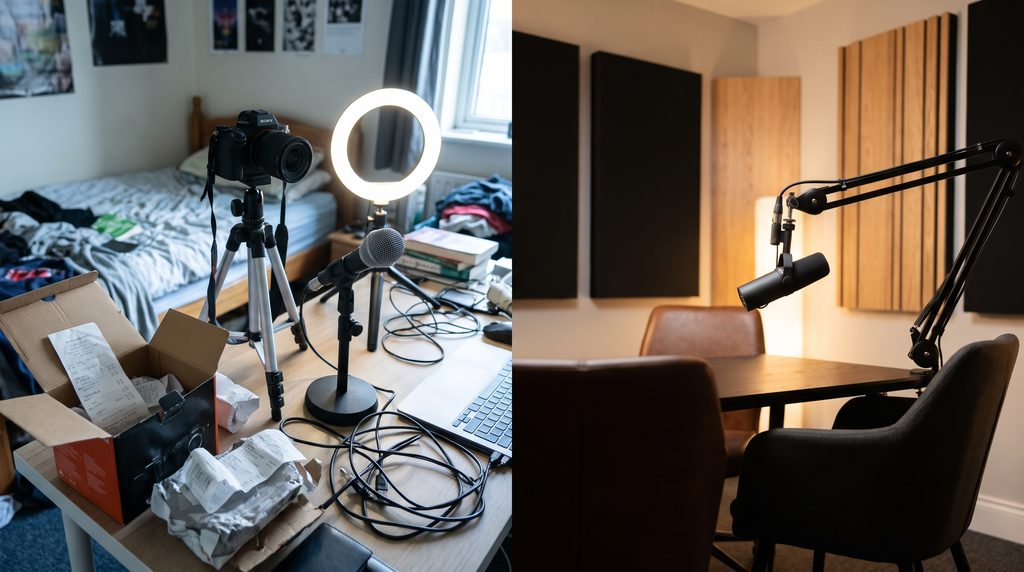
How to Decide Between Camera Gear and Studio Hire for Your Content Plan
The steps are simple. Count your hours, price the kit you’d actually need, and check whether you have a room that already sounds right.
- Count your recording hours. Estimate the hours you’ll film in the next 12 months, not the hours you hope to film.
- Price your real kit. Start with the table above, then add lenses, stands and treatment for your room.
- Divide by the studio rate. Kit cost divided by the hourly quote gives your break-even hours.
- Compare the two numbers. If your yearly hours are lower, hire. If they’re much higher and you have the room, buy.
- Test before you commit. Record two or three sessions in a studio first, so you know the format will last.
Testing Studio Hire Before Buying Any Camera Gear
Most creators don’t know their real recording volume until they’ve filmed for a few months. Studio hire lets you find that number without tying up thousands of euro in gear that may sit in a drawer.
Seeing the space first makes that test easier. You can book a free studio tour and check the sets, cameras and sound before your first session.