You do not need a studio to record a podcast if your show is audio-only and you have a quiet room you can treat. You do need one once you are filming, recording external guests in person, or publishing on a schedule your setup time keeps breaking.
The answer splits because audio and video are two different problems. This covers when home is good enough, where it stops being, how to work out your break-even, and what studio time costs in Ireland.
When Recording at Home Is Good Enough
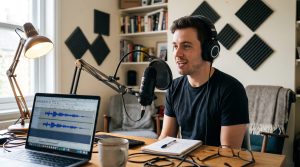
Record at home if you publish audio-only, record solo or with one regular co-host, and have a room you can keep quiet and treat.
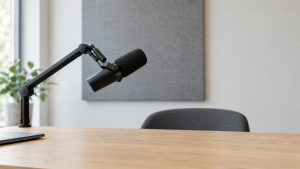
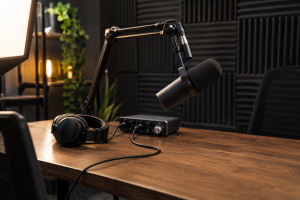
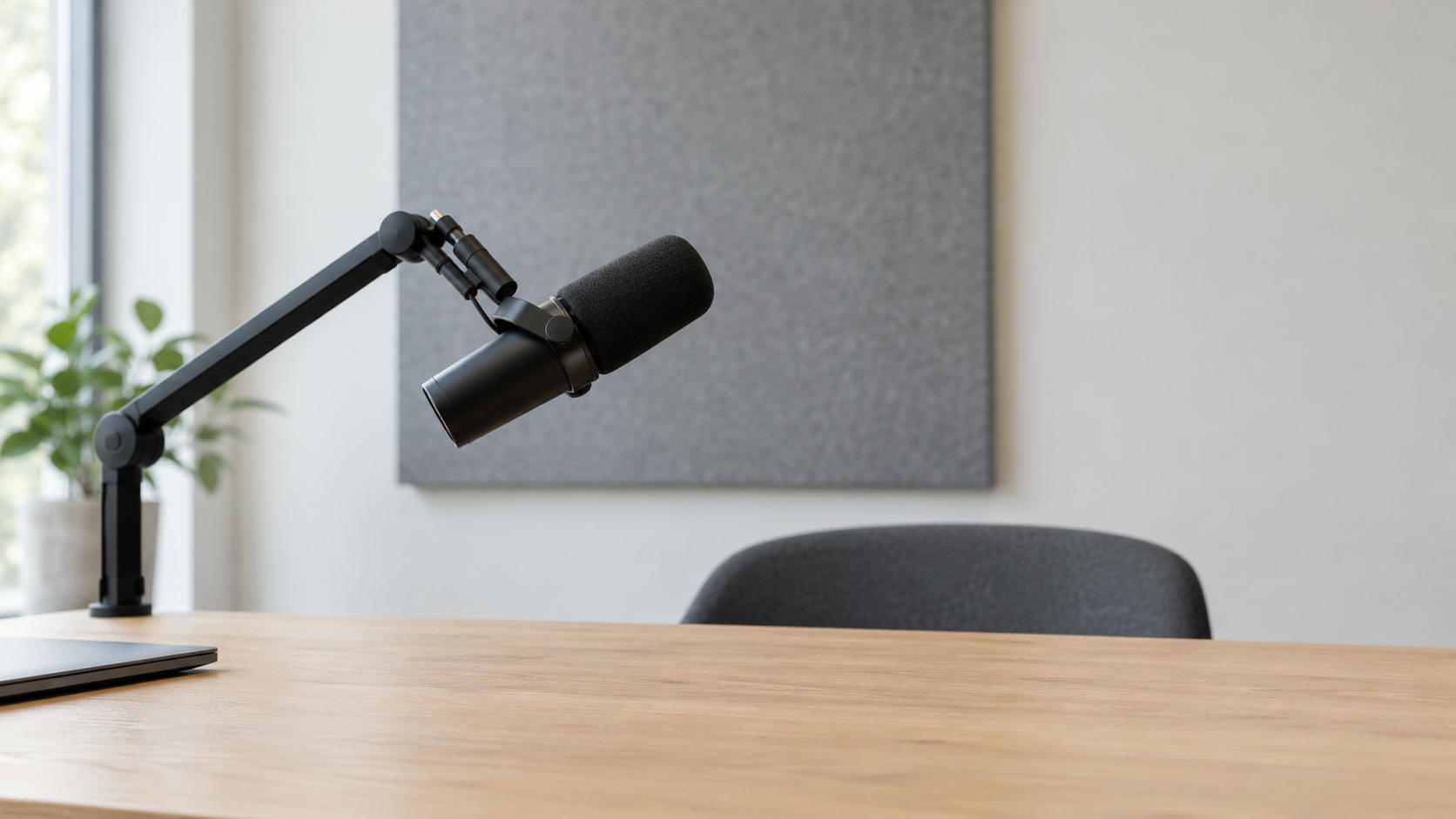
A dynamic cardioid microphone placed close to the mouth rejects most of what a room does to speech. Add absorption at the first reflection points and something soft overhead, and a spare room gets close to a treated booth.
Background noise decides the rest. Traffic, a fridge compressor, a heat pump or a neighbour’s work van all sit under every take, and no microphone removes them at the source.
If that describes a room you already have, buy the treatment before you upgrade the microphone. The room is the bigger variable.
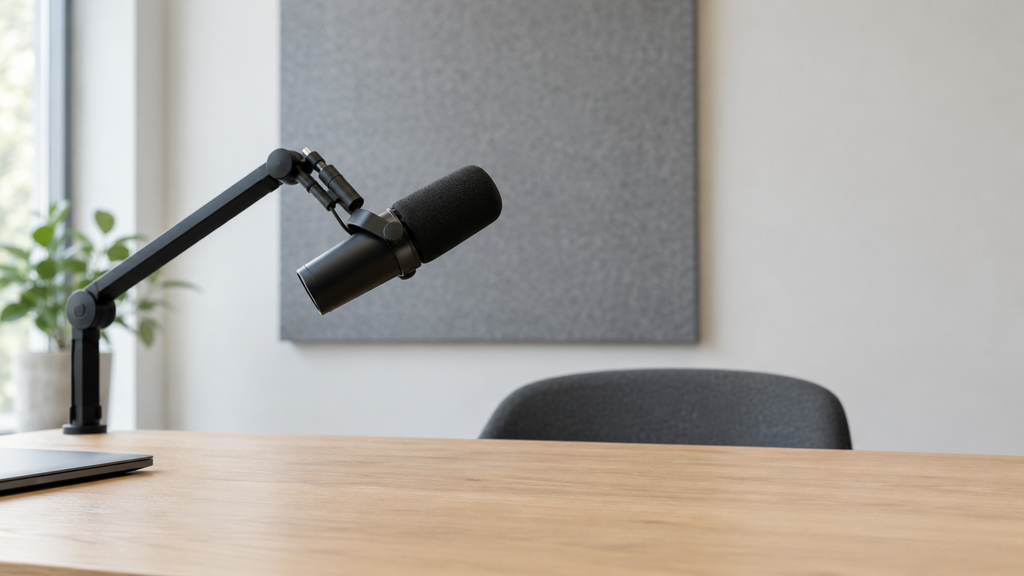
Where Home Setups Start to Cost You
Home setups stop paying for themselves when setup, retakes and cleanup cost more hours than the episode is worth.
Count the whole cycle rather than the recording. Positioning microphones, checking levels and packing everything away happens every single episode, and a weekly show multiplies that faster than most people plan for.
The harder limit is what editing cannot repair. Room reverberation is baked into the file, clipped audio has no detail left to recover, and two people sharing one microphone cannot be separated afterwards.
Good editing fixes pacing, levels, filler and structure. None of it fixes the room the recording happened in, which is worth knowing before you budget for podcast editing as the solution to a space that is not working.
Why Video Podcasts Change the Answer
Video changes the answer because the room becomes part of the product. Lighting, framing and background are visible in every frame, and unlike most audio problems they cannot be reduced afterwards.
A microphone can sit close enough to ignore a room. A camera cannot. It sees the whole space behind you, and a spare bedroom reads as a spare bedroom however clean the sound is.
Multi-camera coverage is the other gap. Cutting between a wide shot, a close shot and a reaction angle needs all three recorded at once, which is difficult in a room sized for one desk.
This is where a purpose-built set does work that is hard to replicate at home. SG Studios runs six sets in Dublin 15, each with a different look, from a white seamless cyclorama to a moss-walled room with leather seating.
One client, Muhammad, made the on-camera point directly: “Every room has its own character. The whole place is well thought out and looks fantastic on camera.”
Working Out Your Break-Even Point
Divide what a home setup costs you by the hourly rate of the session you would otherwise book. The result is how many sessions it takes before buying is the cheaper route.
Gear prices move too much to put a figure on here, so use your own. Take the number you are actually looking at, and divide it by the rate for the session type you would book, not the cheapest one on the list.
Then weigh it against the two things that calculation leaves out: how many hours a month the home workflow costs you, and how many episodes you will still be publishing in a year.
Run honestly, this often favours home for an audio show and a studio for a video one. The video setup is the expensive one to buy and the one most likely to sit unused between episodes.
| Recording at Home | Booking a Studio | |
|---|---|---|
| Upfront cost | Paid once, as equipment | None |
| Cost per episode | Your time | The session rate |
| Setup time | Every episode, both ways | None for you |
| Audio ceiling | Set by the room | Set by acoustic treatment |
| Video readiness | Needs lighting, background and space | Pre-lit and pre-framed |
| Multi-camera | Difficult in a small room | Standard |
| External guests | Workable for regulars | Built for it |
| Schedule control | Total | Limited to booked slots |
If you are pricing the whole show rather than the room, what podcast production costs in Ireland breaks the rest of it down.
What Studio Time Costs in Ireland
Studio hire is priced by the hour, and the rate depends on whether anyone is running the session with you.
At SG Studios, an audio podcast session in the sound-treated booth is €90 per hour + VAT, with professional microphones and boom arms included and raw WAV files delivered. A single-camera video session with a technician is €155 per hour + VAT.
A three-camera multicam session with a producer on site is €250 per hour + VAT, and up to four people can join at no extra charge, which matters for panels and interviews.
Dry Hire sits separately at €85 per hour + VAT. It covers the space plus two basic bi-colour lights, with no technician, no cameras and no setup included, so it suits people who already own gear and want a better room.
Minimum booking is one hour on every tier. Half day and full day rates work out lower per hour, and the full session pricing lists each one. You can see what comes with each session type on the podcast studio setup at SG Studios.
Those figures are quoted before VAT because production is a professional service, charged at Ireland’s standard rate of 23%. If your business is registered for VAT, you reclaim it through your VAT return, so the real cost is the figure before VAT.
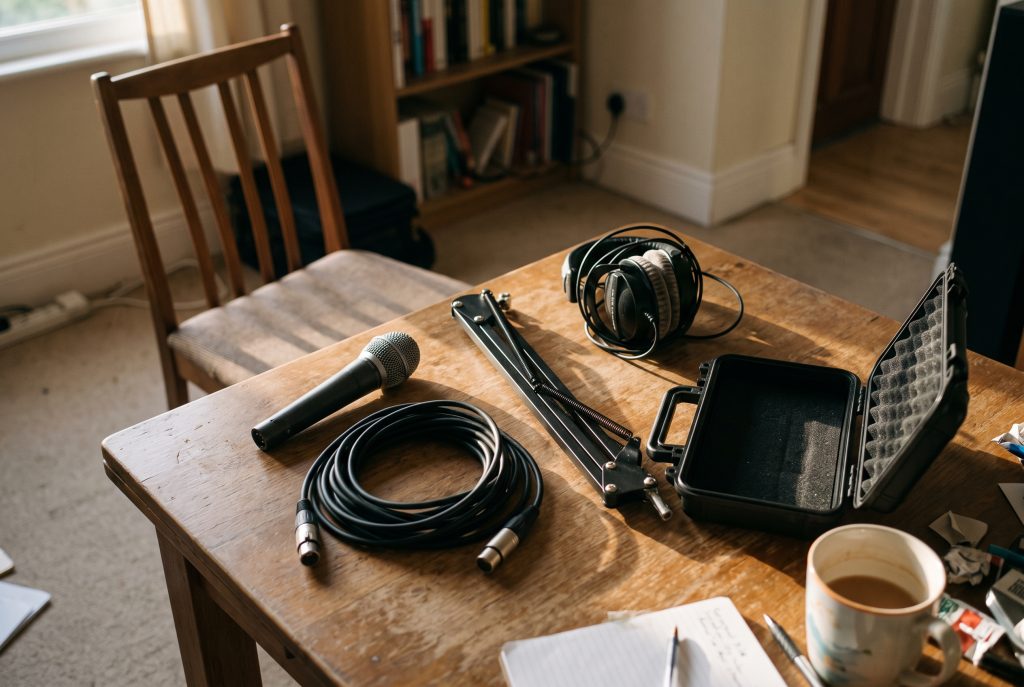
Recording Some Episodes at Home and Some in a Studio
Plenty of shows run both, and that is usually the cheapest way to put the quality where it counts.
Record solo and remote audio episodes at home, where the room is good enough and the schedule is yours. Book a studio for the episodes that have to look right: the guest interview, the panel, a quarter’s worth of video clips.
Batching is what makes that affordable. Recording several video episodes in one booking spreads the session cost across all of them, which is where an hourly rate starts beating a permanent setup you use twice a month.
If you are weighing this up more broadly, which parts of production to outsource is a separate question with its own answer.
Making the Call
Decide by format first. Audio-only in a room you can treat is a home job, and staying there is the right call if you are hitting your schedule and the recordings sound clean. The moment you start filming, bringing guests in, or losing evenings to setup and retakes, the maths changes.
If you want to hear a treated room before committing to anything, book a free studio tour and judge it yourself.