Whether to produce your podcast yourself or hire a professional breaks down stage by stage: planning, recording, editing, post-production and publishing. For most creators the sensible split is to handle planning and publishing yourself, and pay for recording and editing, which is where quality and wasted time cost you the most.
Treating it as one all-or-nothing choice is what leads people to overspend or to release something rough. This guide takes each stage in turn and gives an honest call on doing it yourself or paying for it.
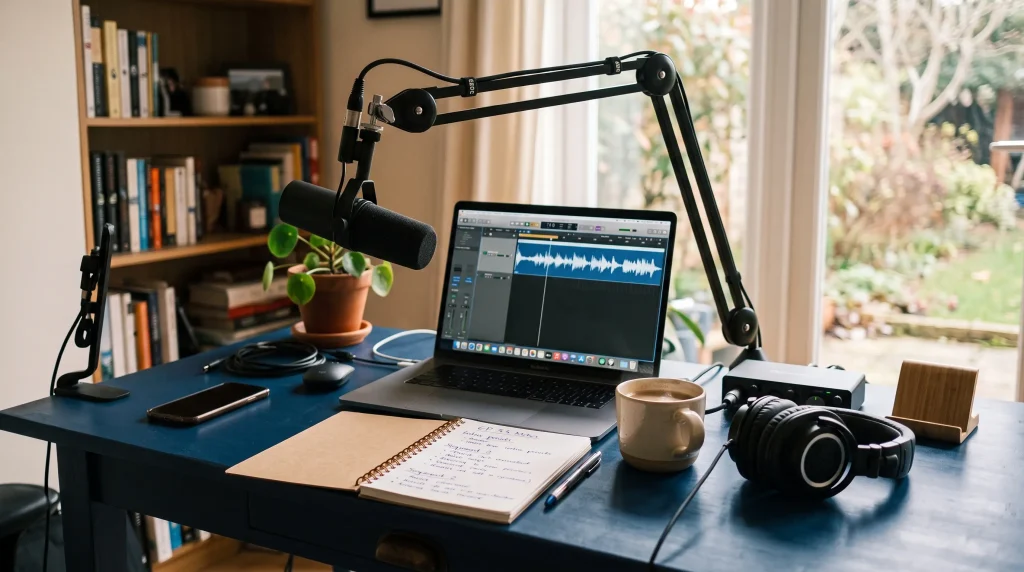
Break Podcast Production Into Five Stages
Producing a podcast is really five separate jobs, and you can keep some in-house while paying for others. The stages are planning, recording, editing, post-production extras, and publishing.
So the DIY-versus-professional question is five smaller questions, and the answer changes from stage to stage.
Two of them decide how your podcast sounds and how much of your week it eats: recording and editing. The other three are cheap to keep in your own hands.
Stage 1: Planning, Almost Always DIY
Plan your own podcast. The format, the topics, the guest list, the episode structure and the running order are decisions only you can make, and no budget buys someone else your show’s point of view.
Planning costs time, not money. It is also what makes every later stage cheaper, because a focused recording needs far less editing than a rambling one.
This is the stage to spend your own effort on, since a strong plan lowers the bill on everything that follows.
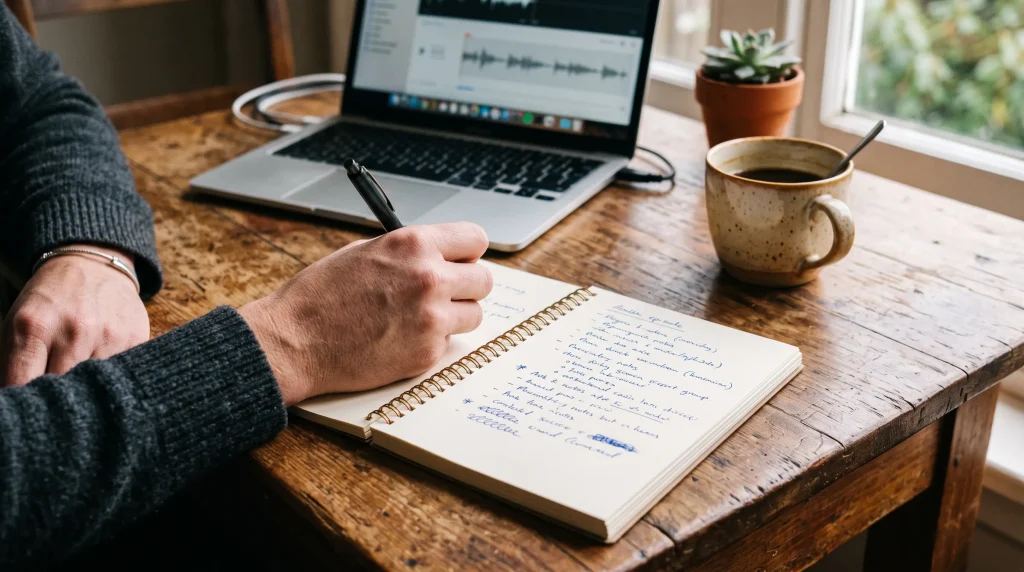
Stage 2: Recording, the Stage Most Worth Paying For
Recording is where paying for quality makes the clearest difference, because a bad recording cannot be fixed afterwards. The room, the mic setup and clean source audio decide how professional the finished episode sounds.
Audio-only shows can be recorded well at home once you control the acoustics and background noise. Video, external guests and panels are where a home setup starts to strain, and where a studio earns its cost.
We compared recording at home against booking a studio in detail in a separate guide, so this is the short version: the room matters more than the microphone, and consistency across episodes is the hard part to do yourself.
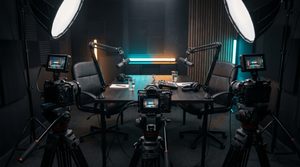
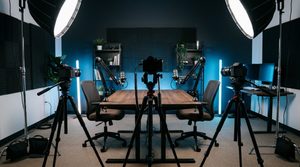
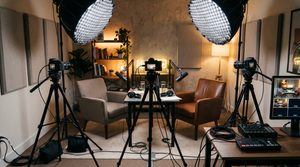
A studio also removes the parts most people get wrong. In a multicam podcast session at SG Studios, a producer runs the recording and checks levels, so you can focus on the conversation instead of the gear.
Anna, who recorded a podcast with us, put the difference down to the setup: “The equipment was top-notch, and the sound quality exceeded our expectations.”
If you are booking your first session, preparing properly beforehand gets far more out of the hour.
Stage 3: Editing, DIY if You Have the Hours
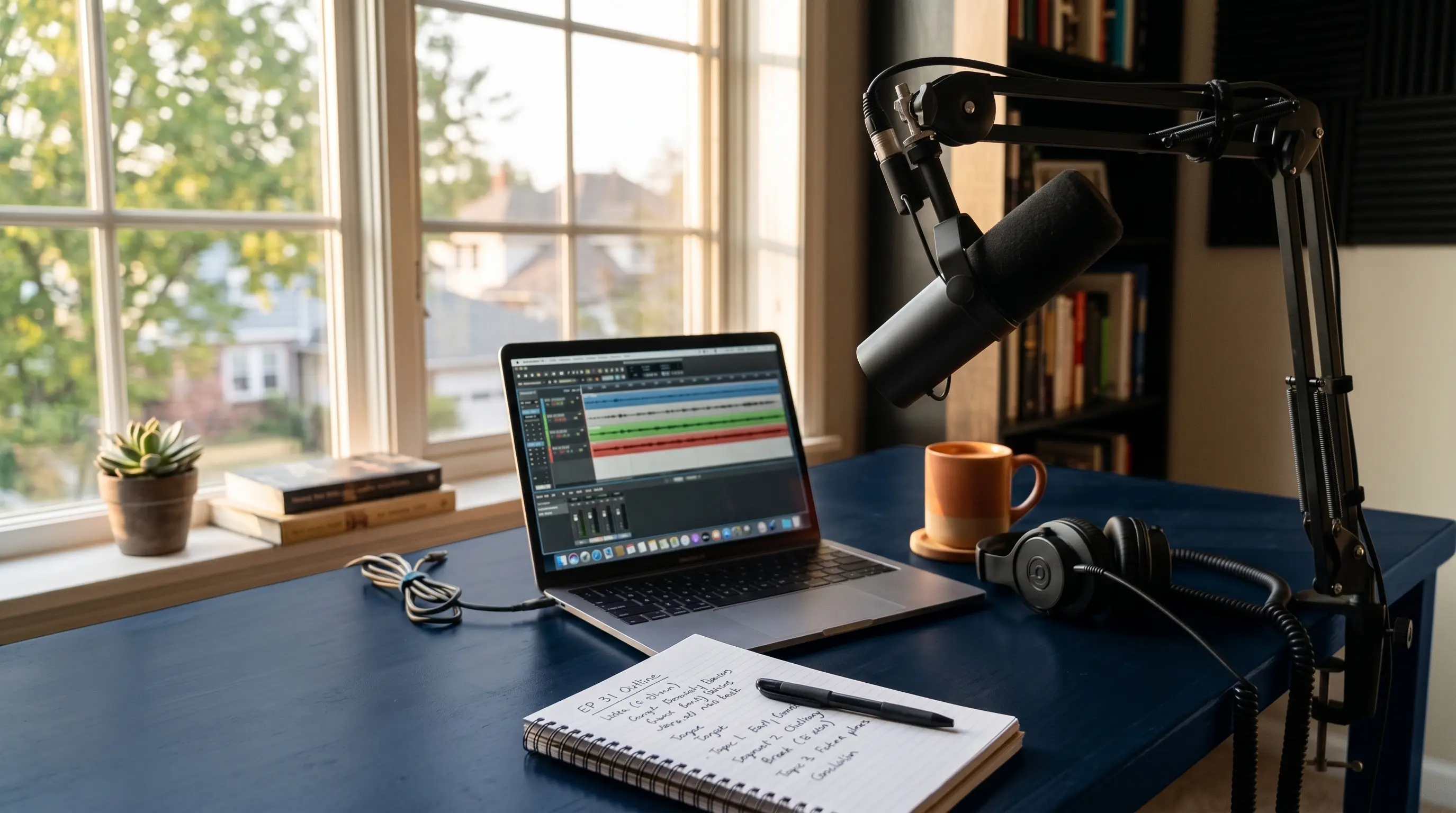
Edit it yourself if you have the time and the skills, and pay for it if you do not, because editing is the most time-consuming stage and the one where hours vanish fastest.
Editing covers cutting mistakes, balancing levels, cleaning up noise, and adding music or intros. A single episode often takes several times its runtime to edit properly, and that time adds up across a publishing schedule.
A confident editor working from a clean recording can do this well at home. If editing is eating your week, or the standard drifts from episode to episode, that is the signal to hand it off.
Podcast editing at SG Studios starts at €75 + VAT and is delivered within 7 business days, with the final price set by episode length.
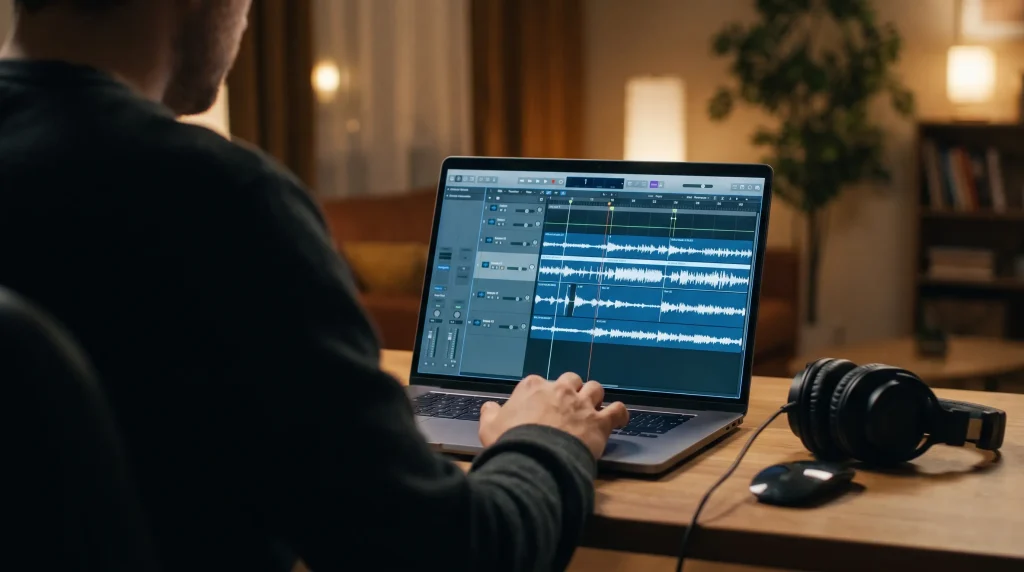
Stage 4: Post-Production Extras
Post-production extras are a mixed call: some are worth outsourcing, others are quick to keep in-house. This covers short-form clips, show notes and transcripts.
Short-form clips for social take real skill and time to cut well, especially from video, so they are often worth paying for. Show notes and transcripts are increasingly quick to produce yourself with the tools now available.
Decide by whether the task needs craft or just time. Clips reward craft. Notes and transcripts mostly need time.
Stage 5: Publishing and Promotion, Your Job
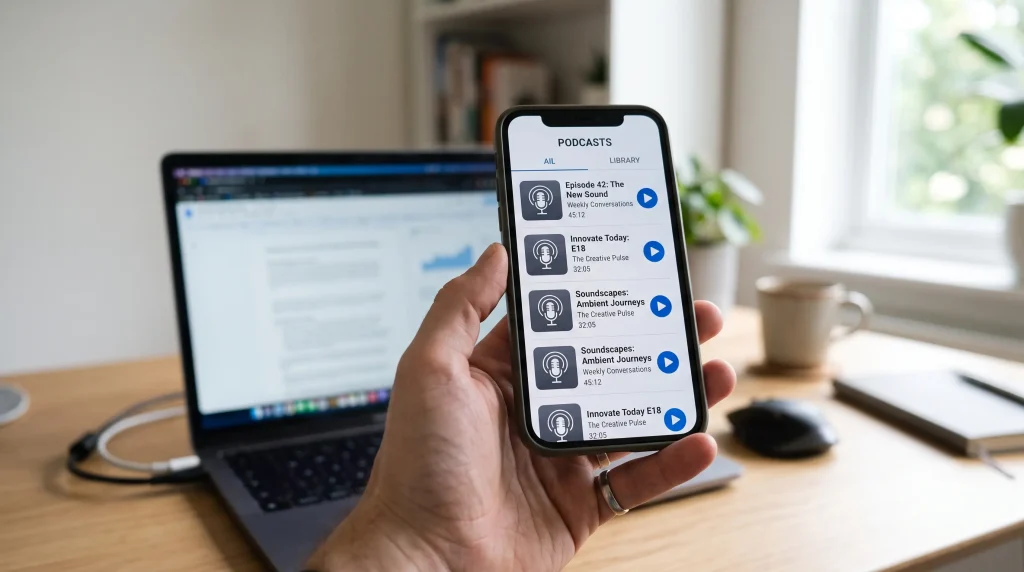
Publishing stays with you. Uploading to a host, setting up your RSS feed and submitting to the apps is a one-time setup that needs no professional help.
Your host generates an RSS feed, you submit it once to each platform such as Apple Podcasts, and after that every new episode propagates automatically. A recording studio does not publish your show for you, and you do not need it to.
Promotion is ongoing and yours to own, drawing on the clips from stage four. This is effort rather than expense, and it is where consistency counts more than budget.
How to Decide What to Outsource
Base the decision on two things: how much time a stage costs you, and how visible the quality difference is to a listener. Pay for the stages that are both time-heavy and quality-critical, and keep the rest.
| Stage | Do It Yourself | Pay When |
|---|---|---|
| Planning | Always | Never |
| Recording | Audio-only and your room is treated | You film, host guests or run panels |
| Editing | You have the time and the skills | Editing eats your week or quality drifts |
| Post extras | Show notes and transcripts | Polished social clips |
| Publishing | Always | Never |
Spend where the quality shows, and keep the rest in-house. For most creators that means paying for recording and editing, and doing everything else themselves.