Product photography in Ireland costs roughly €15 to €60 per finished image for standard e-commerce work, and considerably less per image when you book a studio by the hour and shoot a batch. Prices are quoted before VAT, charged at 23%. Which works out cheaper depends on how many products you have.
This guide covers both pricing models in euro, what pushes the number up, how to compare quotes priced two different ways, and how VAT works for Irish businesses.
Why Product Photography Has Two Different Price Tags
Product photography is sold two ways, and quotes built on the two models are rarely compared like for like. You either pay a fixed fee per finished image, or you pay for studio time by the hour and keep whatever the session produces.
Per-image pricing suits a small catalogue. You know the total before anyone picks up a camera, and for six products at three angles each, that predictability is worth paying for.
Hourly pricing suits volume. Once there are thirty products to get through, the rate spreads across all of them and the cost per image falls with every item added to the day.
Working out which model fits your catalogue is the biggest single decision in the budget. Plenty of businesses ask for a per-image quote by default, then find the session rate would have covered twice the work.
What Product Photography Costs Per Image in Ireland
Per-image rates for standard e-commerce work generally sit between €15 and €60 for a finished, retouched image. Simple white-background shots fall below that band, and styled lifestyle work rises above it.
Across Europe, freelance product photography commonly runs around €15 to €60 per finished image, while bundled packages work out near €50 an image once concept and styling are counted in. Regional guides put basic single-angle work at the bottom of the scale and lifestyle, model or 360 work at the top.
White Background and Packshot Images
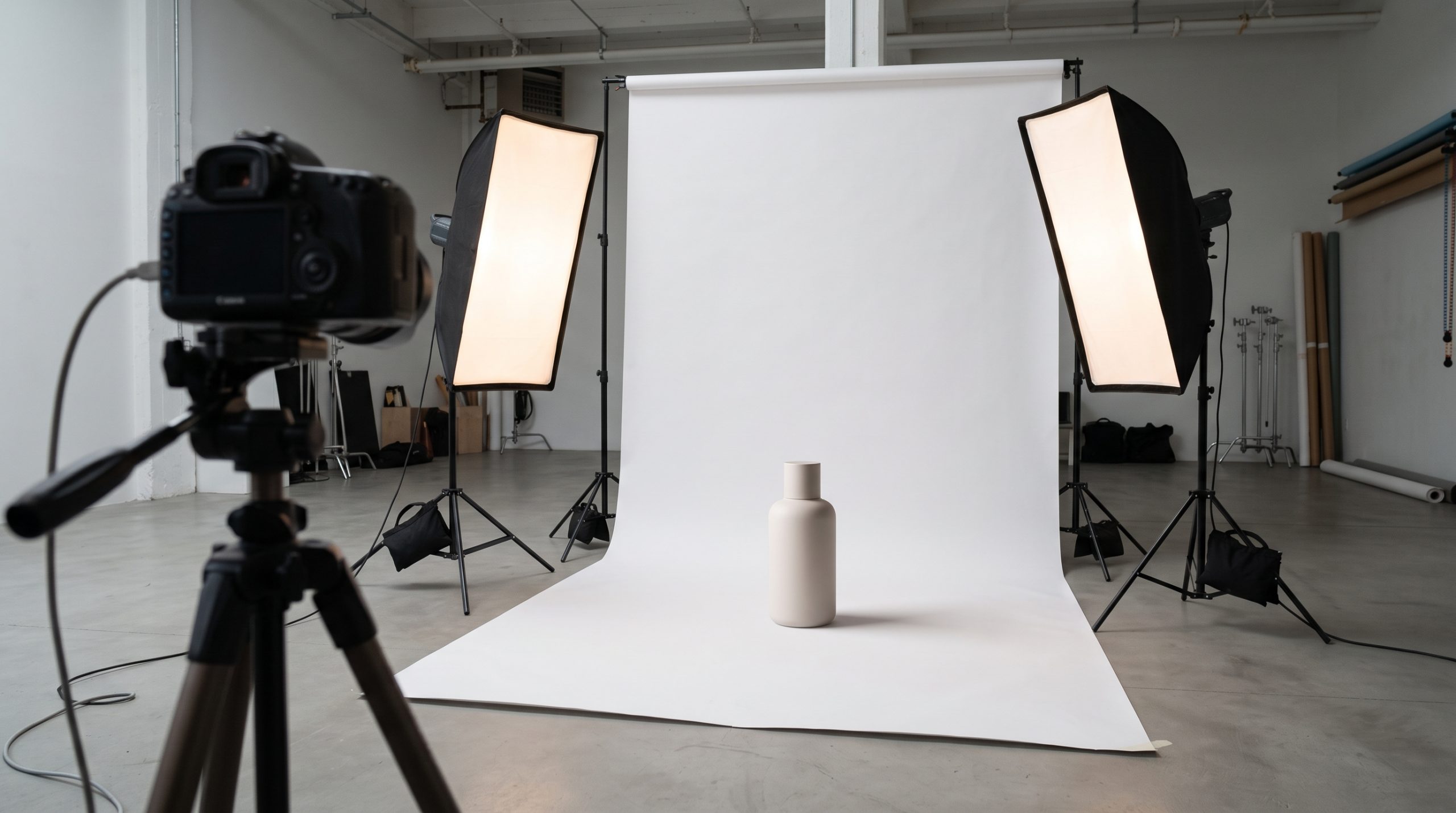
White-background images are the cheapest to produce and the ones most marketplaces require. Expect the bottom of the range, because the setup repeats and the retouching is light.
Add a controlled shadow or reflection and the price rises. The lighting takes longer to set and the edit is more involved.
Lifestyle and Styled Images
Lifestyle images cost more because the quote covers everything around the product. Props, a set, styling time and sometimes a hand model all land in the price before the shutter is pressed.
This is where quotes diverge most. Get the number of finished images written down rather than agreeing a day rate and hoping.
360 and Specialist Shots
360 spins sit at the top of the range and suit a narrow set of products. They earn the cost where close detail decides the sale, in jewellery, furniture and fashion.
For most catalogues they are the first thing to cut. Three good angles and a scale shot do more for conversion than a spin nobody clicks.
What Drives the Price Up
The price moves on volume, complexity and what happens after the shoot, far more than on time spent shooting.
- Number of products and angles. Every extra view is a separate image and is usually billed as one.
- Retouching. Cut-outs, colour correction and blemish cleanup are often quoted apart from the shoot.
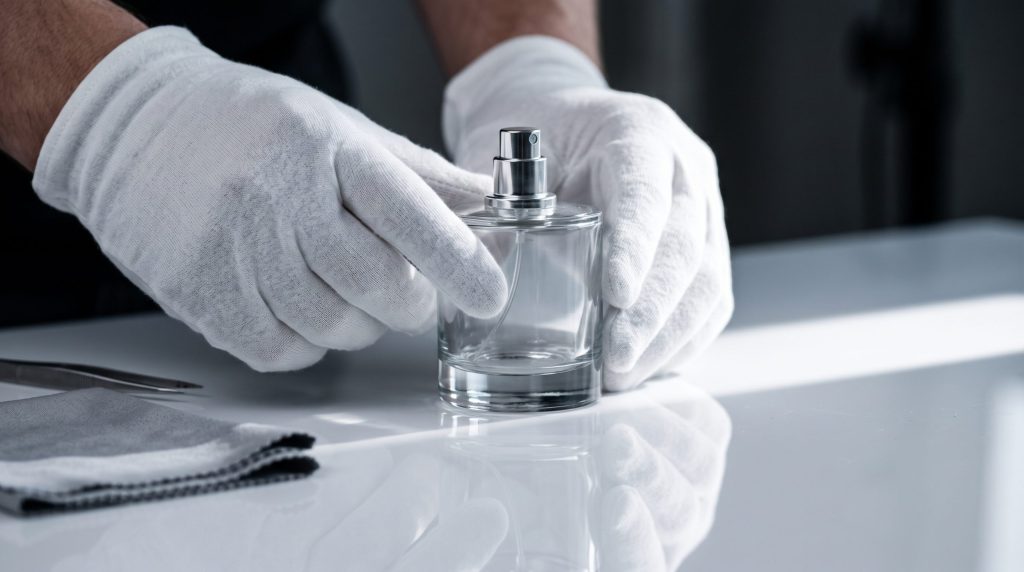
- Product material. Glass, chrome and anything reflective takes longer to light than a matte box.
- Styling and models. Props, sets and hand models add cost before anything is photographed.
- Usage rights. Some commercial agreements price by where the images run and for how long.
- Turnaround. Compressed deadlines carry a premium on most rate cards.
When Hourly Studio Time Works Out Cheaper
Hourly studio time works out cheaper once you have enough products to fill the session, because the setup cost spreads across everything shot that day.
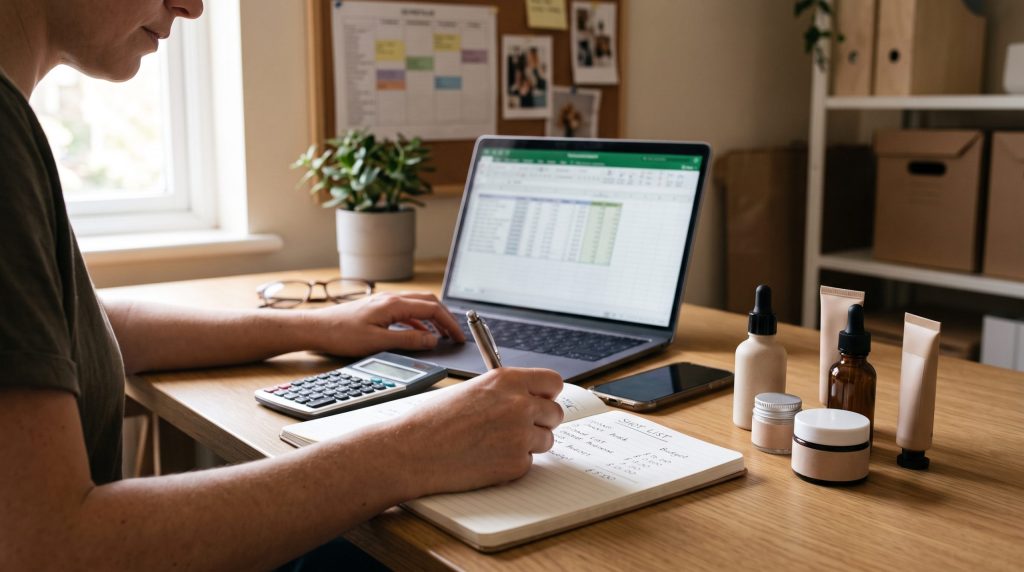
To compare two quotes properly, convert both to a cost per finished image. Take the session cost, divide by the number of images you expect from it, and put that figure beside the per-image quote.
Take a four-hour session at €250 per hour plus VAT, so €1,000 plus VAT. If the day produces thirty finished images, that is about €33 each. The same thirty quoted at €40 an image comes to €1,200.
The variable is how many images a session realistically produces, and that depends almost entirely on how prepared you arrive. A disorganised four hours in a studio session produces fewer usable frames than a planned two.
| Per-Image Pricing | Hourly Studio Session | |
|---|---|---|
| How you pay | Fixed fee per finished image | Hourly rate for the session |
| Typical cost | €15 to €60 per image for standard e-commerce work | From €85 per hour + VAT self-shot, from €250 per hour + VAT with a photographer |
| Best for | Small catalogues, one-off launches, heavily styled work | Larger catalogues and repeat shoots |
| Cost per image | Fixed, whatever the volume | Falls as the number of products rises |
| Known in advance | The full total | The hourly cost, with image count varying |
For three products, per-image pricing almost always wins. The crossover arrives somewhere around a dozen items, earlier if the products are similar enough to share one lighting setup.
What Product Photography Costs at SG Studios
Product photography at SG Studios costs €250 per hour plus VAT, with the photographer, lighting, styling and editing included. Product video runs at €200 per hour plus VAT and can be shot in the same session.
Studio-only hire is €85 per hour plus VAT. That covers the space and two basic bi-colour lights, with your own photographer bringing and operating the camera and the rest of the gear.
For a larger range, pricing is quoted as a fixed package by product count, so the cost per product drops as the range grows. You can see the options on the product photography studio page.
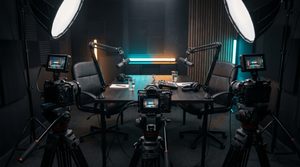
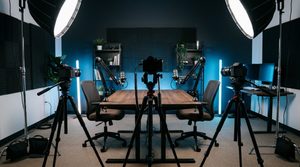
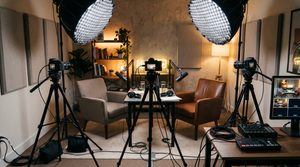
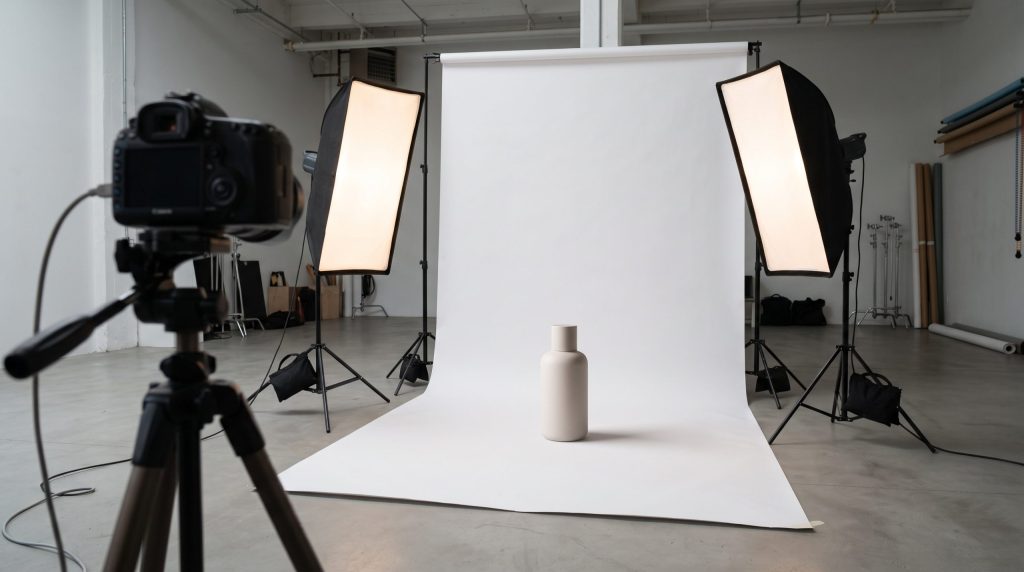
There are six sets in the Dublin 15 studio, which matters more for lifestyle images than for white-background work. White cyclorama suits catalogue shots, while the other sets give a styled image somewhere to live.
How to Keep Product Photography Costs Down
The fastest way to cut the bill is to shoot the whole catalogue in one sitting rather than booking again every time a product launches.
A few things lower the cost without lowering the quality:
- Batch the catalogue. Group similar products so one lighting setup serves several of them.
- Write the shot list first. Decide the angles per product before the day, not during it.
- Prep the products. Clean, steamed and tag-free items save retouching time, and retouching is often billed separately.
- Order the images you will use. Extra angles that sit in a folder still cost what they cost.
- Shoot video in the same session. The setup is already standing, so the marginal cost is time rather than another booking.
If you want a figure before enquiring, it helps to work out a session estimate for the length you have in mind.
Longer bookings are where the maths shows up. Lesley, who came in for a four-hour shoot, said it “felt like very good value for the level of support, equipment and flexibility included”. Spread across a full catalogue, that is the per-image number coming down.
VAT on Product Photography in Ireland
Product photography is charged at Ireland’s standard VAT rate of 23%, because photography is a professional service. If your business is registered for VAT, you can normally reclaim it, so the real cost is the figure before VAT.
This is why studios and photographers quote with “+ VAT” rather than a VAT-inclusive price. A €1,000 shoot is €1,230 including VAT, and a registered business reclaims the €230 through its VAT return.
The standard rate is set by Revenue, which places professional services in the 23% band. Citizens Information covers how VAT works and when a business can claim it back.
Getting the Cost Right
Product photography has no single price, because two different ways of buying it sit behind the same label. Count your products and your angles first, convert every quote you get into a cost per finished image, and the right option becomes obvious.
For most businesses with a real catalogue, a planned session covers more ground than they expect.
If you want to see the space and the lighting before you commit, book a free studio tour and have a look around first.