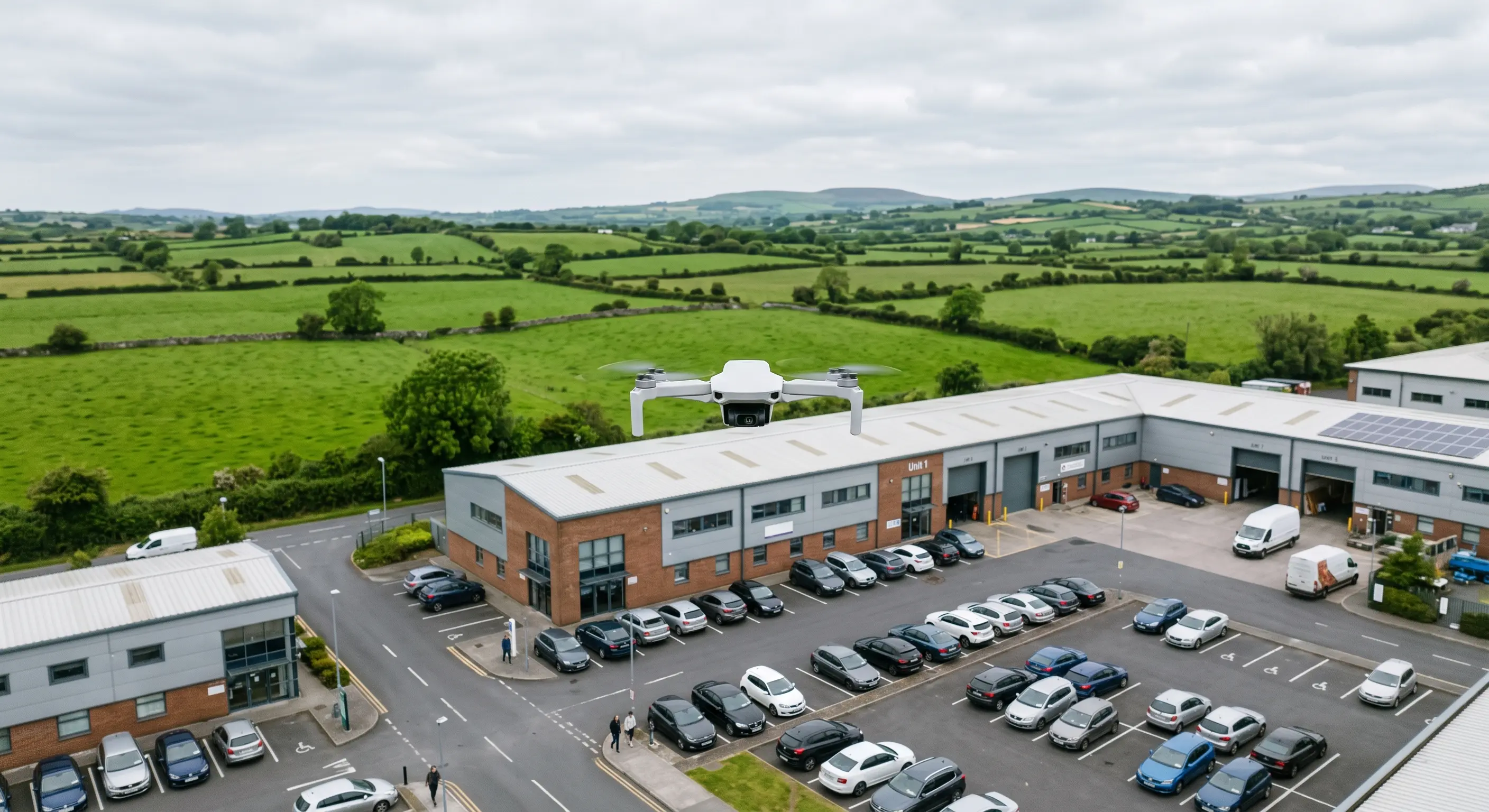
You do not need a special business drone licence in Ireland, because there is no single drone licence at all. To fly a drone for commercial work you register as an operator with the Irish Aviation Authority (IAA), hold the right pilot competency certificate for your drone, and carry insurance. Higher-risk flights need extra approval.
This guide covers what business use actually requires, what it costs in 2026, and when you need more than the basics.
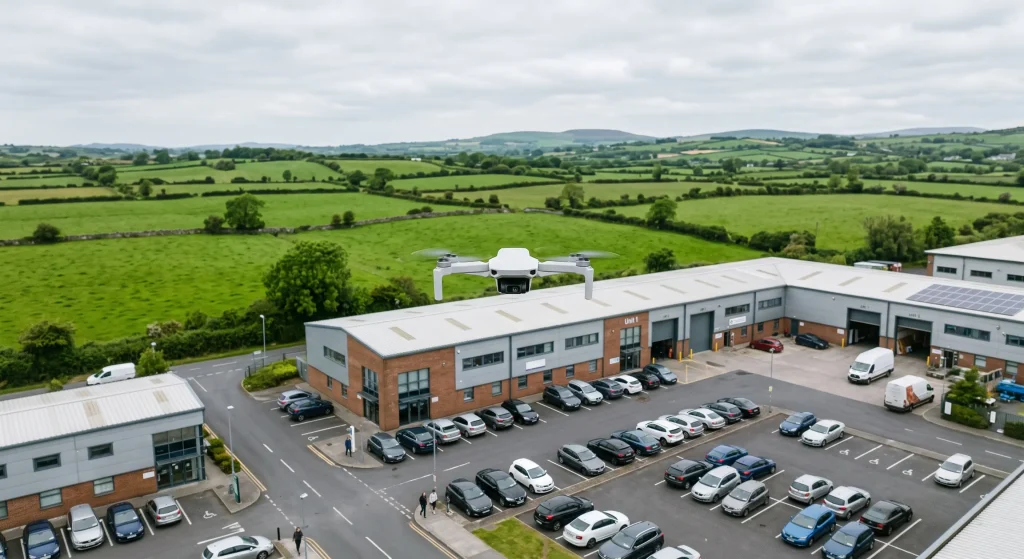
Why There Is No Special Business Drone Licence
Irish drone rules are set by the risk of the flight, not by whether you are being paid for it. The requirements come from EU regulations that the IAA applies, and they sort every flight into three categories: Open, Specific and Certified.
Most commercial camera work sits in the Open Category, the same category a hobbyist flies in. There, a business has the same obligations as anyone else: register as an operator and hold the correct pilot competency for the drone.
Being paid changes two things, and neither is a licence. You must be insured once you fly for money, and if the job is higher-risk you move up to the Specific Category and need IAA authorisation. Both are covered below.
What You Must Have to Fly a Drone Commercially
For standard commercial camera work you need three things: operator registration, a remote pilot competency certificate, and insurance.
Operator Registration
You must register as a drone operator with the IAA if your drone weighs 250g or more, or carries a camera, which covers almost every camera drone. You register yourself, not the drone, so one registration covers every drone you own.
Registration costs €41 and is valid for two years. You receive an Operator ID that must be displayed on the aircraft and loaded into its Remote ID.
Remote Pilot Competency
For any drone over 250g you need a pilot competency certificate. The entry level is the A1/A3 certificate: a free online course of a short video and 40 questions on the IAA’s MySRS platform, with the certificate itself costing €51 and valid for five years.
To fly closer to people you need the A2 Certificate of Competency at €128. Heavier drones and higher-risk flying need further training through a designated training organisation.
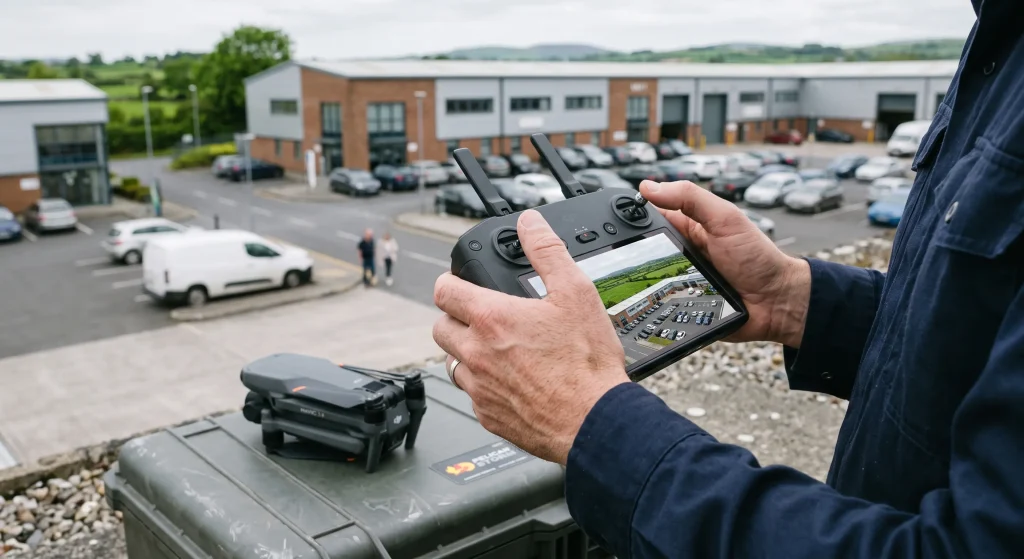
Insurance
Once you are paid to fly, third-party liability insurance is a legal requirement, not a recommendation. EU Regulation 785/2004 exempts only drones under 20kg flown for sport or recreation, so any commercial flight needs cover whatever the drone weighs.
The regulation sets a minimum of €1 million per accident. Commercial policies for camera drones start higher in practice, and clients often ask to see proof of cover before a shoot.
How Much It Costs to Get Set Up in 2026
A business flying a standard camera drone can be fully legal to fly in the Open Category for €92. That is €41 registration plus the €51 A1/A3 certificate. IAA fees are VAT exempt.
Here are the current IAA charges, from its 2026 schedule:
| What | Cost | Valid For |
|---|---|---|
| Operator registration | €41 | 2 years |
| A1/A3 online training certificate | €51 | 5 years |
| A2 Certificate of Competency | €128 | 5 years |
| Specific Category theory (STS) | €205 | 5 years |
| Operational Declaration (Standard Scenario) | €514 | 2 years |
| Operational Authorisation (SORA, SAIL I and II) | €3,595 | 2 years |
Insurance is separate and paid to an insurer, not the IAA, so it is not on this table. Its cost depends on the cover level and the type of operation.
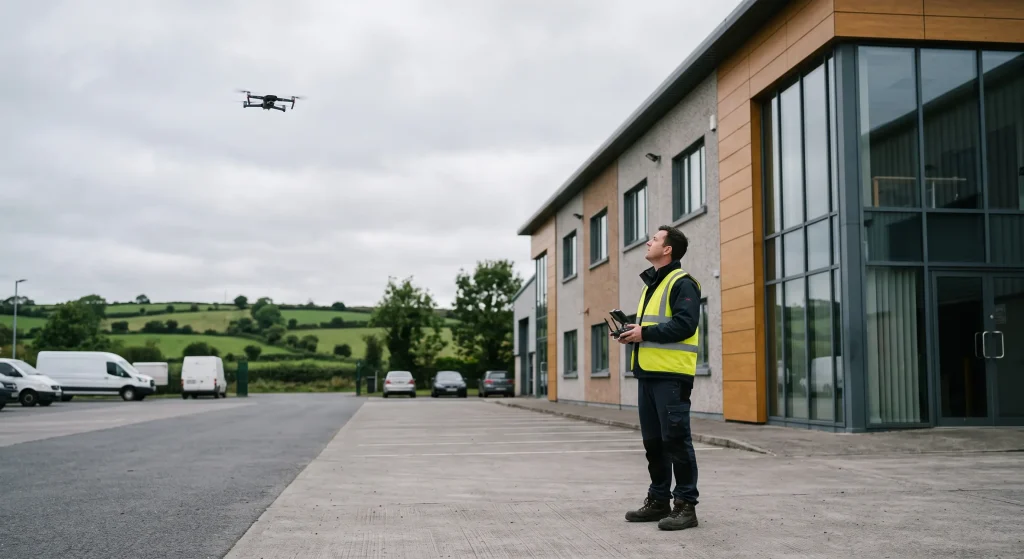
How a Company Registers Differently
A company can hold one Operator ID that covers the whole business, separate from the personal certificates its pilots hold.
The company verifies itself on MySRS and receives a company Operator ID. The staff who fly then each complete the training and hold their own pilot competency certificate.
The company, as the operator, is responsible for making sure anyone flying its drones is properly certified. That split matters for a business: the registration belongs to the company, and the competency travels with the person.
When You Need More Than the Basics
You move into the Specific Category, and need IAA authorisation before you fly, once a job goes beyond Open Category limits. That includes flying beyond visual line of sight, over crowds, in controlled airspace, above 120 metres, or with a drone over 25kg.
Plenty of real commercial work triggers this: filming over a busy town centre, inspecting a tall structure, or covering an event with people below. These flights need a risk assessment and IAA sign-off, which takes time and cannot be arranged on the day.
Check the IAA’s UAS Geographic Zones before any shoot too. Some areas, including near airports and certain restricted sites, are off-limits or need permission whatever certificates you hold. Flying commercially without registration, the right competency or insurance is not legal, and the IAA enforces the rules.
Doing It Yourself or Hiring a Drone Operator
For a one-off marketing video, hiring a compliant operator is usually faster and cheaper than getting your own team registered, certified, insured and current. For regular in-house filming, the investment in your own setup pays off.
Getting legal to fly is inexpensive. Getting good, insured and confident enough to fly safely over a real business location is the part that takes time, and the insurance and Specific Category paperwork add up for higher-risk jobs.
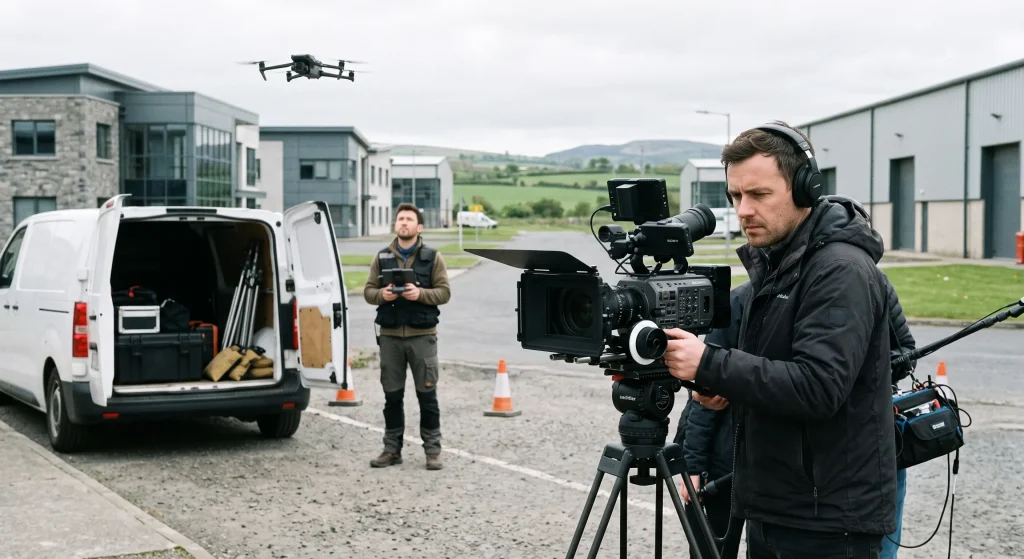
That is why most businesses commission aerial footage as one part of a video project rather than building the capability in-house. Aerial shots usually sit inside a larger piece, whether that is a brand film or event coverage that mixes ground and air.
SG Studios offers drone videography as part of its production work, so the aerial footage is planned and shot alongside the rest of the project.
Getting It Right Before You Fly
Flying a drone for business in Ireland is less about a licence and more about three steps: register as an operator, get the right competency certificate, and insure the work. Know when a job crosses into the Specific Category, because that approval cannot be rushed.
If you would rather commission the footage than build the capability yourself, book a free studio tour and talk through what your project needs.